
Resistance
Futile or--?

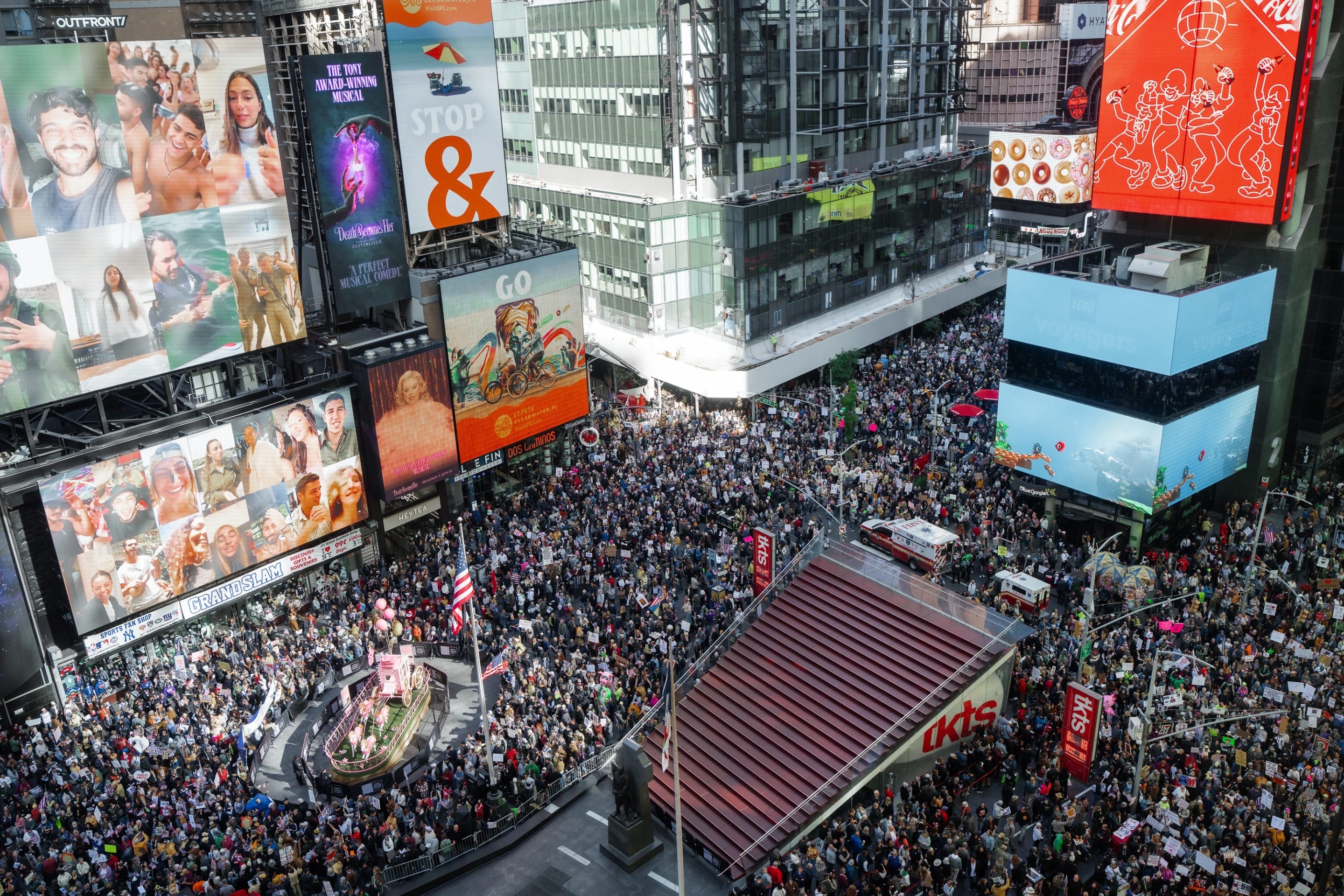
Looking at the picture its hard to entertain the idea that such a strong show of protest is “futile” or “cringe” but one does hear those words in conversation and in print. At least once that I recall I’ve even said “futile” myself, or agreed with a friend who said “it feels futile.” I meant that as a description of my worst feelings rather than as a real opinion and indeed it’s understandable to feel that way when judges and lawmakers keep declaring that what Trump does is illegal and yet he keeps doing it with no consequence; when immigrants, including those who are legal, including children, are dragged off the street and out of their homes in the middle of the night by masked, unidentified thugs and either disappeared or locked in detention centers with inhumane conditions; when you talk to Trump supporters who are apparently decent, intelligent people and who either deny that such things are happening (it’s a distortion by the mainstream media) or yes, the tactics are a little rough, mistakes happen but given the out-of-control immigrant situation, it’s necessary, broken eggs = omelette, etc; when you read interviews with farmers who are being driven bankrupt by tariffs and yet heartbreakingly declare that if they have to be sacrificed for a better future they are willing, they still support Trump.
These things—and I’ve just scratched the surface—can make action, even conversation feel futile, yes. Even if you are someone who, like me, likes to have conversations with people who have different opinions.
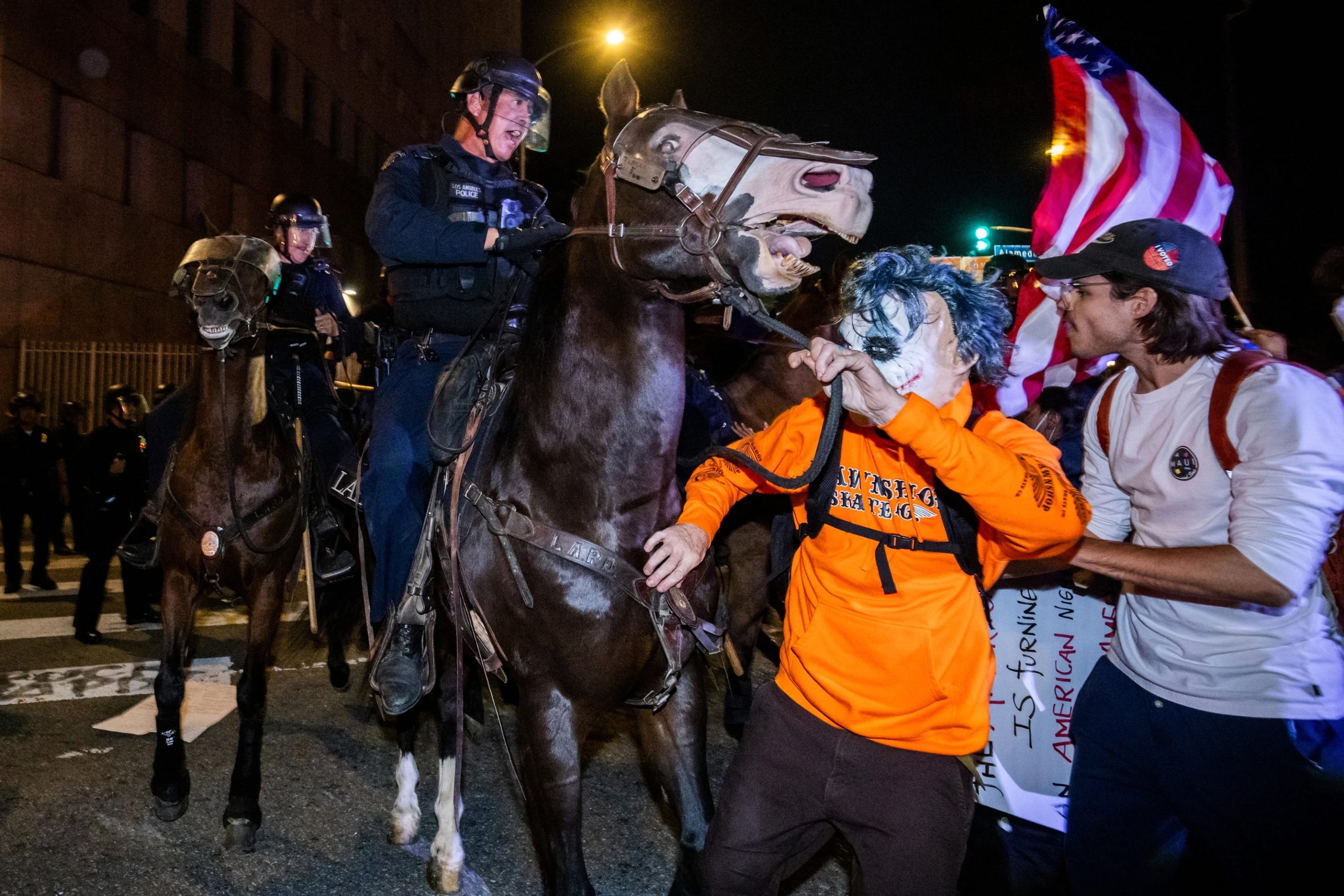
I did not attend the protest this last time around, though not because of feeling futile; I’d arranged an interview with a bar owner on the subject of barroom fights and Saturday afternoon was when he could do it. After the interview was basically done we talked a little about politics, including No Kings. The guy’s an old-school liberal, maybe in his sixties, and while he detests Trump he had a lot of harsh words for progressives who in his mind have forgotten that the most important thing is class/income inequality. He also thought No Kings was a performance with silly costumes that would not do any good, that in fact it highlighted left-wing weakness. I could agree with a lot of what he said even if my agreement was superficial, based on my dislike of crowds and my even stronger dislike of chanted slogans, even those that reflect my opinions. Even the word “resistance” strikes me as a little theatrical.
But as he talked I remembered something that happened to me many years back when I was living in San Francisco. (This “something” will not be immediately relevant but bear with me.) I was walking on what I would normally have considered a safe street, I think it was Dolores between the Castro and the Mission. It wasn’t late at night, I’m thinking maybe 9:30-10:00. I turned down that street because it was a weekend and I didn’t want to deal with festive crowds. When I came to a particular block I did notice how dark and deserted it was; just as I had the thought, I heard the sound of running behind me, then someone grabbed me and slammed me facedown on the pavement, him on top, hand over my mouth. Basic self defense: if he has one hand on you don’t fight, he has a weapon in the other hand. Two hands on you, fight if at all possible. He began to run his free hand over my body; with my free hand I reached back and repeatedly struck him with my fist on what was probably his thigh. As self-defense it was a truly futile gesture that just highlighted my weakness. And yet. I still remember very vividly that when I did that he hesitated, ever so slightly, but enough to let me know that he had, on a human level, responded to my protest. Basic self-defense: if you want to get someone’s hand off you do not grip and pull at the hand, not if he’s stronger. Take his little finger—no matter how strong that’s where he’s weak—and pull it back hard and fast; because he doesn’t want a broken finger he will let go. So I did that. I got his hand off my mouth and began shouting for help. Basic self-defense: when shouting for help, don’t shout incoherently, that is easy to ignore. Shout words like Help, I’m being attacked. I shouted those exact words several times; at a certain point the guy froze, then a few seconds later very abruptly got off me. I jumped up and wildly looked around. I didn’t see him (he’d run away in the other direction), I saw a guy on a bike who’d ridden up and stopped the attack with his presence.
How is this relevant? The things I did might’ve been futile. Certainly my weak blows on the attacker’s leg were futile in a practical sense. But I still think it was good that I did it, even before I got his hand off my mouth and yelled. That could’ve been futile too, had the guy on the bike not been in the vicinity. But even without a good result, even he’d succeeded in doing whatever it was he planned to do, the failed effort would be better than nothing. I shared this with the bar owner and actually, I think it made sense to him.
I’m guessing most of you have read George Orwell’s classic 1984; it comes to mind for many reasons, not the least of which is that I just saw the documentary Orwell 2+2=5 by Raoul Peck. The novel is famous for phrases such as “two minutes of hate” and “hate week” which describe the citizens of a totalitarian state gathering for mandatory malice sessions in which they violently scream at supposed enemies of the state and ecstatically cheer as those enemies (often refugees, including children) are mercilessly killed. Equally famous are the scenes in which a brutal representative of the state, through systematic mental and physical torture, forces the imprisoned protagonist to believe that 2+2=5; he actually makes him see five fingers instead of four. This is key, as the torturer explains: obedience is not enough. The state must destroy the person on the inside, break their will, the functioning of their mind, corrupt their most innocent and intimate being.
The novel tells a terrible story that nonetheless acknowledges the vital nature of each individual’s sovereign being, the ability to stand in your own experience and, when necessary, to resist a more powerful force even when the resistance cannot have any outer effect. In the first clause of that sentence I originally used the word “sacrosanct” instead of “vital;” I changed it because sacrosanct means “inviolable” and if 1984 illustrates anything it is that the intimate core of a human being can indeed be violated, even destroyed, if the power to destroy it is big and determined enough.
That is one very basic reason that protest of any kind has value, even if it has no immediate practical effect. It helps to keep alive that inner will and the ability to assert it, makes it harder to destroy. Even if I had not been assisted by the guy on the bike, even if the guy who attacked me on the street had been able to go forward with his plan, the fact that I did what I could would’ve been that kind of inner assertion. And even with my aversion for large crowds, I can see that joining that inner will with others makes it stronger and more likely to succeed.
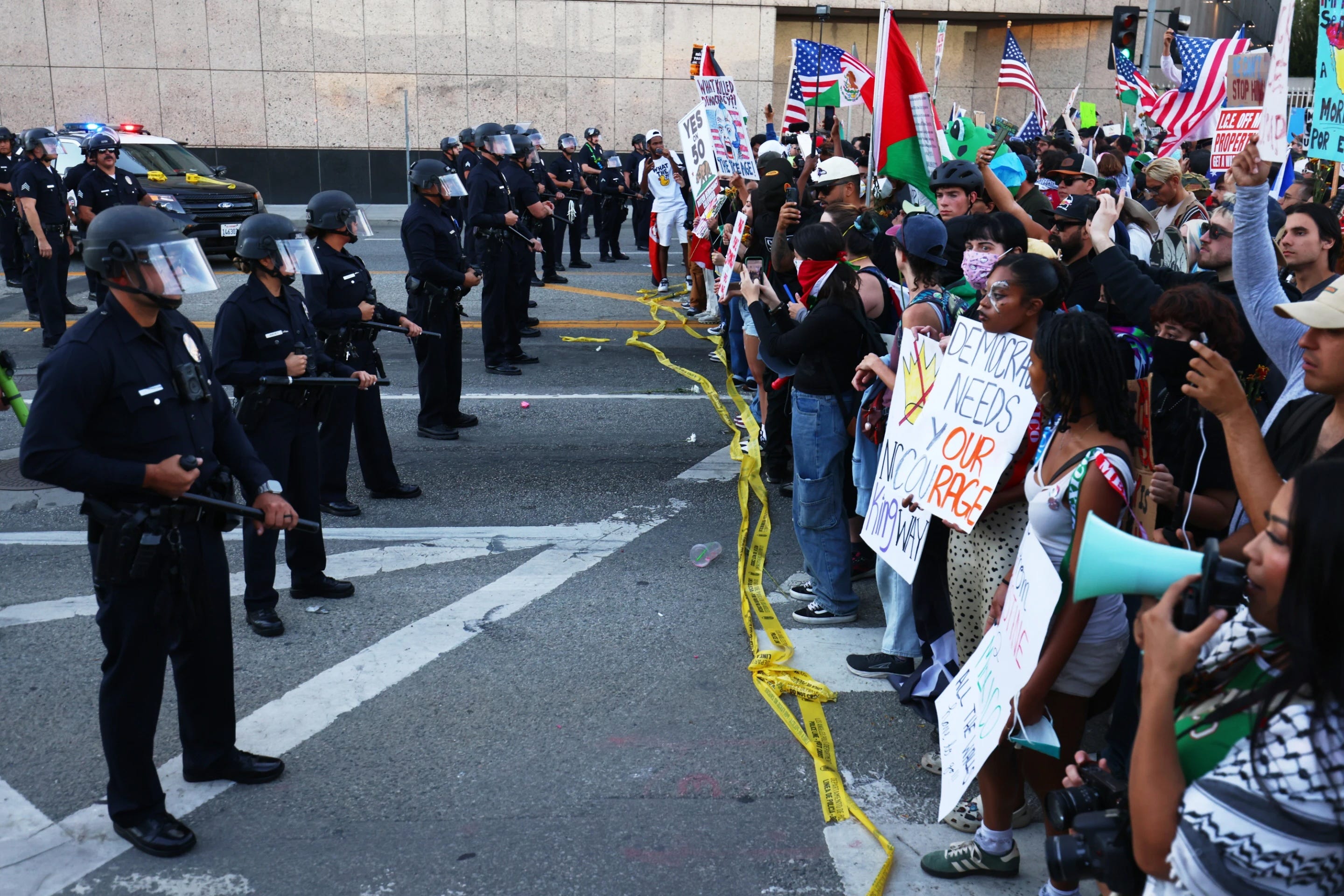
Which is of course no guarantee of success. But put it this way: If you resist you might be clobbered. If you don’t resist you will definitely be clobbered.
Hi, Mary. I went to the No Kings demo here in Chicago. While I have questions myself about how effective these are, riding down in a packed El train and then joining reportedly 250K other people—the largest demonstration I've been in by far—hearing literally the roar of the crowd, it reassured me. Not that it's stopped ICE, which it hasn't, but what if nobody showed up? What would that say about this city, this country? There are no mass demonstrations in 1984, or Brave New World, or Fahrenheit 451. And it's not just us rabble. The mayor and governor both spoke against Trump and ICE. The police were cordial, if not friendly. This is not the 60s. We'll have to wait and see what it is, but here in the hellhole, there's a spirit of defiance and solidarity, as clichéd as that might be to some.
Oh, and there was a sign that said "No monarchs except the butterflies" and I thought Nabokov might've enjoyed that.